
Michelle Choi
Chan Dick is a photographer who enjoys capturing everyday subjects through an artistic lens. Having studied graphic design, he incorporates graphic design elements into his photographic work, particularly evident in his photobooks, refining them to achieve the desired results he wants to have. He now focuses primarily on photography. As a professional photographer, his subjects encompass natural environments, social phenomena, and architectural structures. He captures seemingly mundane objects or hidden details through simple lines and off-angle compositions. His most renowned work, Chai Wan Fire Station (2014), captures the everyday life and training of firefighters in Hong Kong from a unique bird’s-eye view through his studio’s ventilation window. Through this unique angle, the photographed figures appear as miniature models existing within reality. This piece also marks his first award-winning work, being honoured with the Hong Kong Photo Book Awards in 2015 and the Tokyo International Foto Awards in 2016. Through his photographic perspective and the form of his images, he conveys the current state of society and the changes of the times. Throughout his career, he is interested in documenting Hong Kong’s daily life, a practice he continues to this day.
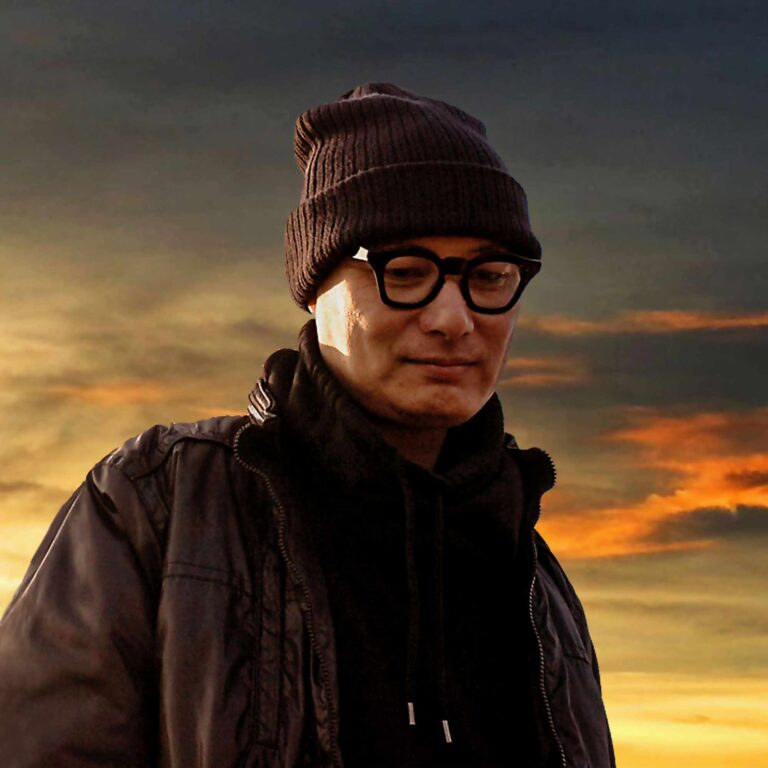
Our conversation took place at the Festival Walk, in a small café. When I arrived, Chan Dick had already found a seat. We exchanged warm greetings and began with casual stories about our daily life. After ordering drinks and desserts, we turned the conversation to the pieces he creates with his camera. The following interview is grounded in Chan Dick’s work, The Trek (2018), a photography book on human anatomy which leads us into our body with an artist’s perspective.
M = INTERVIEWER
C = CHAN DICK
M: You were interested in drawing and studied graphic design; and yet, your professional practice is firmly rooted in photography. How’s this shift from drawing to photography shaped your visual thinking?
C: Drawing trained me how to exercise the poetics of reduction. When you draw, you choose what not to exclude before choosing what to include. Photography was a late arrival, but I tackled it with similar discipline since I never wanted to be loaded with detail or technical parade. Graphic design has taught me organisation, space, and moderation; and the same rules continue to inform my decisions in photography. The camera’s turned itself into a means to distil, and not only to document. That’s why my photos are minimalistic, yet not simple. They’re compressed decisions.
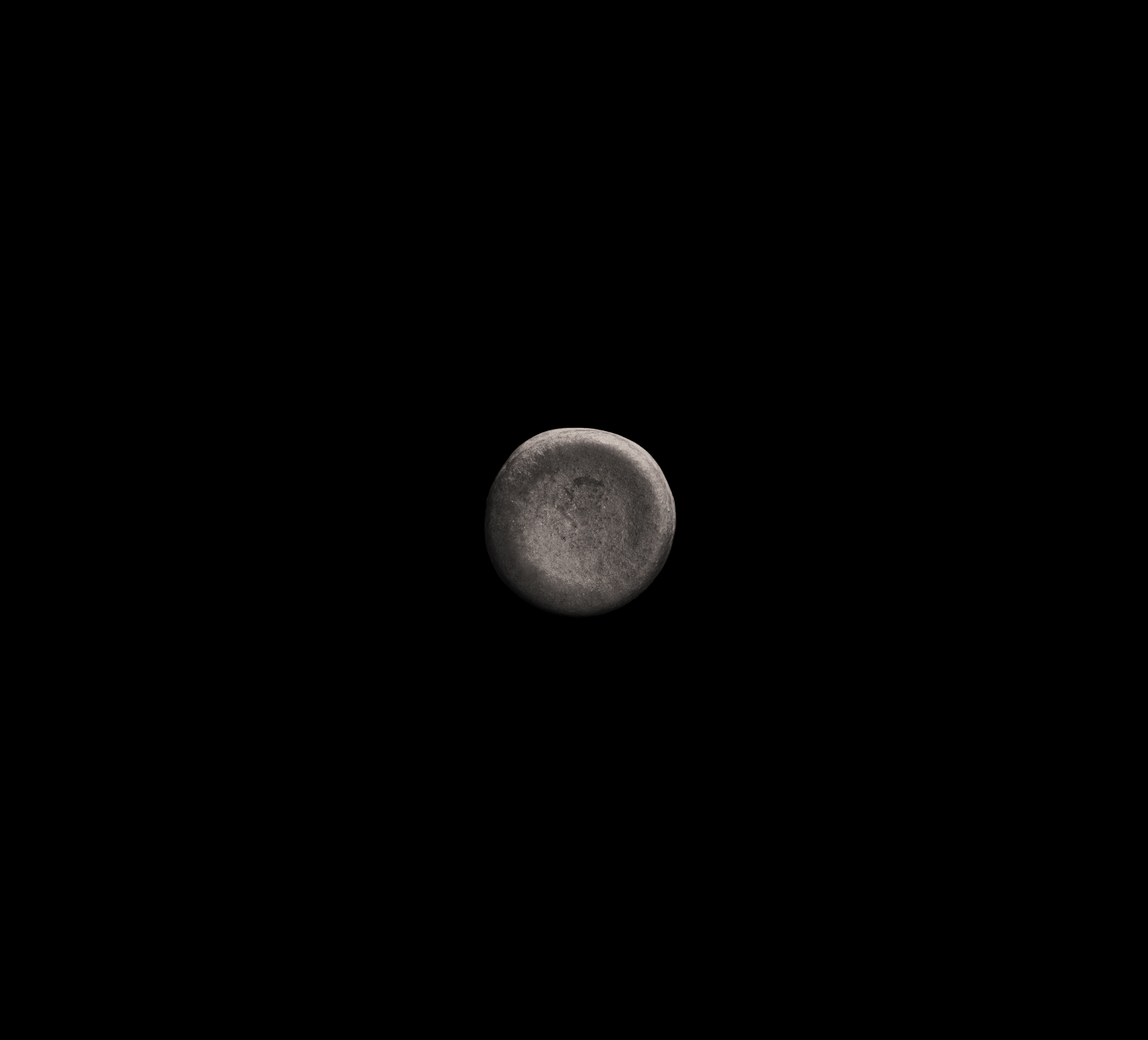
M: The concept of reduction is especially evident in The Trek, where human specimens are transformed into landscapes and organic forms. What was the significance of not depicting anatomical details directly, as those in scientific analyses?
C: Anatomy carries authority since the medical gaze is trained to categorise and label. I didn’t want to reproduce that hierarchy. When individuals view organs directly, they feel fear or curiosity, yet both reactions establish distance. I wanted to create access into our body without instructions on how to feel, and so I reconsidered the specimens as valleys, flowers, or even textiles. I wanted to enable viewers to see the image not intellectually, but emotionally. It’s only later that they understand what they’re witnessing, and that delayed realisation is essential.
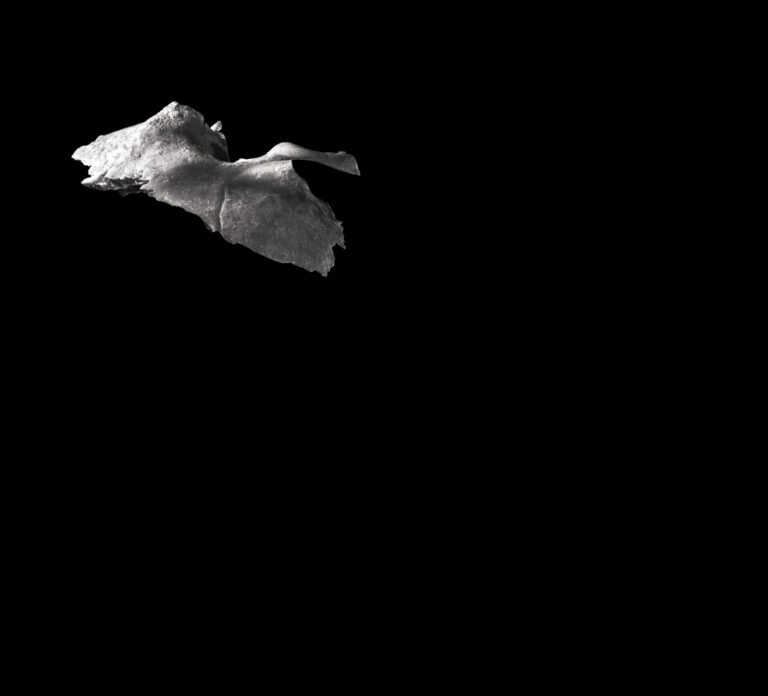
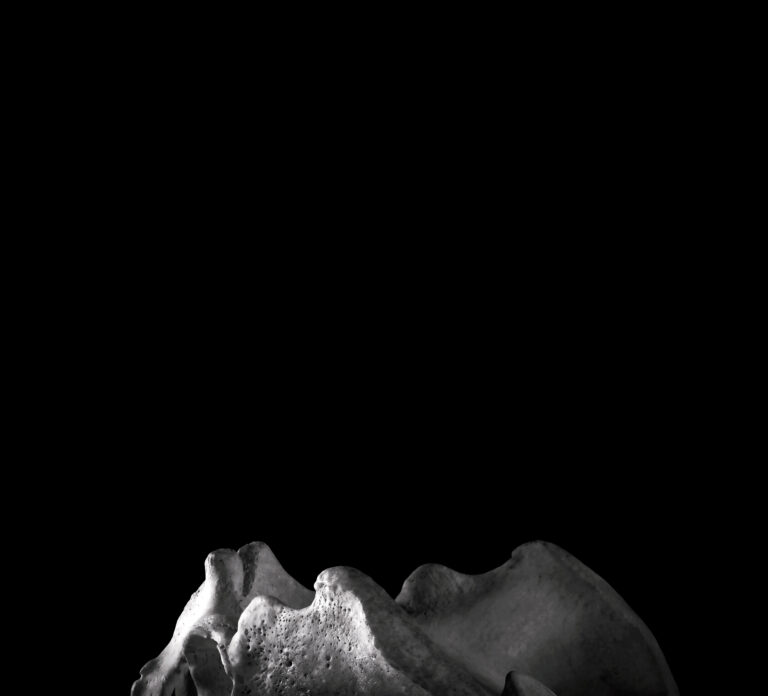
M: In your series The Trek, one photograph presents a bone fragment that resembles a bird in flight against a void, while another shows a cross-section of tissue fibres similar to a dense, ancient forest. In your shifting focus, I see a continued merging of reality and illusion. Why do you feel this integration is important?
C: Good observation. Reality’s often too heavy to present directly; and as I indicated earlier, the public often has a fearful perception of human specimens, as they can evoke mortality. Creating an illusion by reframing a specimen as a flower or a river valley invites the reader to look longer, relate themselves to the image, and ultimately realise they’re looking at themselves. This discovery and connection are what I aim to facilitate.
M: I’d then say that the work unsettles a long-held perception, but not as educational in a traditional way.
C: Yes, but I’d say it reorders the process of learning. Not all knowledge can be explained. In some cases, it emerges from hesitation, from those moments in The Trek where the reader’s denied a quick resolution. It’s in this pausing space that room is made to contemplate our body, mortality, and the ethics of viewing. I want people to look at the human body beyond the boundaries imposed by science, culture, religion, or taboo.
M: The fact that you partnered with The University of Hong Kong’s medical school demonstrates institutional trust. What was your approach to ethical responsibility when handling human specimens?
C: Ethics was at the centre of the work. I constantly remembered that these were once humans. My project focused on respect, anonymity, and purpose. I steered clear of sensational angles and didn’t highlight trauma or pathology. I didn’t wish to aestheticise death, but to restore dignity through abstraction. To me, ethics is the tenderness for an image to embrace its subject.
M: For The Trek, how does the book form, rather than an exhibition space, matter to this project?
C: An exhibition is controlled by architecture, crowd movement and distraction, while a book controls tempo. In The Trek, the sequencing was designed so that the images appear almost like a journey through a landscape. The title suggests movement, perseverance, and growth. I wanted the reader to get immersed in a journey through the body but without being told that they’re inside it.
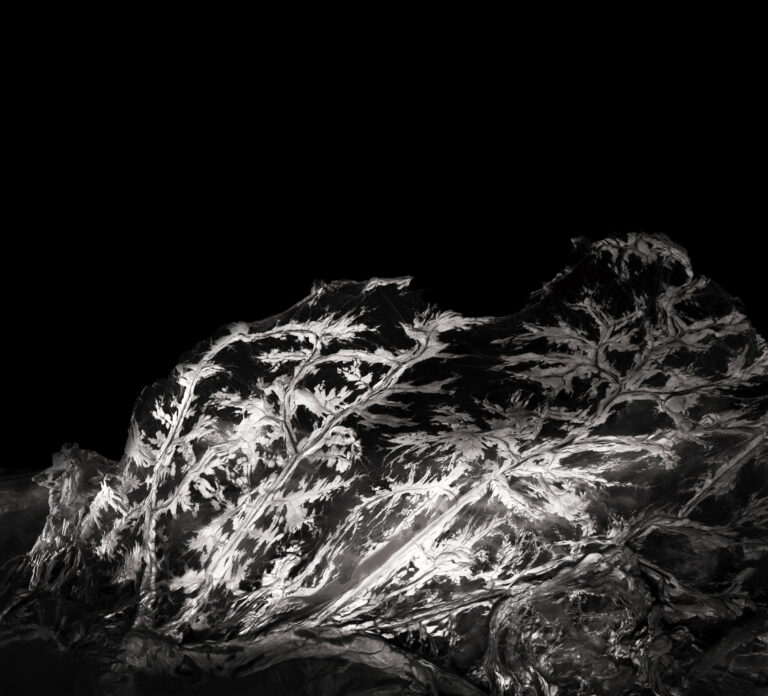
M: The landscapes that you rendered for the images are frequently ambiguous. Some look like rivers or geological paths, others like cloth or botanical architecture. Was this ambiguity deliberate?
C: It was very intentional. Ambiguity prevents closure since an image that settles too soon on one reading ceases to engage. I want the images to be open, so that the reader has to carry their own memory and imagination to the seen. One person sees a river valley, another a lace. Both are correct, and both tell us something about how we give meaning to our body.
M: Unlike your previous series, Chai Wan Fire Station (2014), The Trek seems to be less about society and community in general? How do you see such a change?
C: I interpret it as a deepening, not a departure. The Trek’s about the most basic and shared condition: physical vulnerability. The body remains engaging with every one of us even in silence. By re-presenting human specimens, I reflect upon the way medical units define our relation to life and death.
M: What do you feel The Trek has contributed to regarding the way people think about human specimens and photography as an art?
C: I believe it’s softened the gaze. I’ve heard many readers say they were initially lured by the photos’ beauty and subsequently unsettled by a sense of familiarity. That shift matters. It questions the idea that medical imagery should be purely clinical and that photography must clarify. I want the book to help people consider challenging topics with patience, not avoidance.
M: Your dedication to photography has been recognised globally with awards from Japan, Hong Kong, and the International Photography Awards. How do these recognitions impact you personally and professionally?
C: The prizes are recognition, not approval. They sort of let me know my work resonates beyond its immediate context. It matters particularly because the projects themselves are anchored within a city. The issues that The Trek addresses are not culturally specific. Professionally, awards open up exhibition opportunities; personally, they serve as a reminder that quiet work can travel far.
M: Your works have been exhibited in museums in Japan and Hong Kong. Does exhibition alter your thinking about legacy?
C: It brings accountability. Once a museum acquires a work, it enters a dialogue that extends beyond my lifetime. That consciousness promotes rigour. It also pushes me to think of what future audiences who might not be a part of contemporary discussions will see and experience. I strive to produce work that can still be read even when contexts change.
M: In our previous discussion, you’re eager to hear more about the experiences of younger generations related to modern life and education. How’s your curiosity feeding your practice?
C I learn from listening. My own thinking has blind spots that can be revealed by younger generations. Their experiences of anxiety around productivity, identity, and uncertainty are profoundly embodied. These discussions make me more sensitive to vulnerability and resilience. To me, photography doesn’t exist in isolation from dialogue; it’s shaped by it.
M: I’ve to ask: do you think photography can change society? And should more young people take it as a long-term career?
C: Yes, but not in isolation. Photography acts as a mirror or a window that prompts deeper, often uncomfortable, reflection. Photography can make people pause, reflect, question, and dig deeper into their long-held perspectives. The younger generation should continue and advance the work we’ve been doing. However, change comes from people, but art can speak to or encourage the thought that begins the change.
M: How’ve you been developing your professional practice after The Trek?
C: Since then, I’ve kept working on cross-disciplinary projects, specifically where art overlaps with science, history or urban studies. But I want to go even further beyond literal representation. I’m also working on how personal and institutional archives can be reactivated visually without turning them nostalgic.
M: What’d you like the reader to take away after experiencing The Trek?
C: I hope they can sit with uncertainty. Not confusion, but openness. When the work gets them to rethink their understanding of the human body, their relationship to images or to death, it has done its job. Photography need not provide answers.
M: Lastly, upon reflection upon your career, what’re you most proud of?
C: That I never gave up on being curious. That I never stopped making those simple yet reflective images. I kept asking, “What more is there?” That question is the driving force for me. I hope it continues to ignite my work.
Michelle Choi is a full-time student pursuing journalism at The Hang Seng University of Hong Kong. She likes exploring different ideas and themes through research and interviews. Drawing inspiration from photographs and artworks, she writes about stories that can inspire others to create their own art.